
We seldom consider the cost of negative emotions like fear, yet it’s important to recognize: The cost can be substantial. Relational dynamics associated with fear can negatively impact success in school or career, personal relationships, business deals, and even local, national, and global issues that affect us all.

Here are just a few expense categories that might be tied to the fear in your life, all of which I encourage you to itemize:
- Mental health: Fear generates stress, anxiety, and other negative emotions that can take a toll on mental well-being and productivity.
- Physical health: Fear triggers the body’s stress response, releasing cortisol and adrenaline. Persistent fear can lock in this stress response, leading to chronic headaches, digestive issues, impaired immune function, and cardiovascular problems. These health issues can increase healthcare costs while reducing productivity.
- Relationships: Fear can strain your existing relationships and discourage you from forming new relationships. It can lead to jealousy, conflict, and isolation. Fear may cause some individuals to become withdrawn, defensive, or controlling, impacting their ability to connect with others on a meaningful level.
- Professional: Fear of failure, success, rejection, or criticism can hinder career advancement and professional development. Such anxieties may discourage you from sharing ideas, taking risks, speaking up in meetings, or pursuing opportunities for growth.
- Financial: Fear can lead to either too risky or overly safe purchase or investment decisions. For example, fear of investing may result in missed opportunities for wealth accumulation, while fear of job loss or fear of change may prevent you from negotiating for a higher salary or seek better employment opportunities.
- Personal growth: Fear limits personal growth and self-actualization by discouraging us from exploring beyond our comfort zones. It can prevent us from pursuing our passions, trying new experiences, or achieving our potential.
- Quality of life: Ultimately, fear can diminish overall quality of life by restricting freedom, joy, and fulfillment. It may prevent us from fully engaging in life’s opportunities and experiences, leading to a sense of stagnation or dissatisfaction. It can even negatively impact decision making in organizations and governing bodies. Just watch the evening news and try to identify how much time, money, and other resources are wasted on fear-based responses to local, national, and global issues.
Organizational Costs of Fear Dynamics
When fear reigns in an organization, people respond in the following ways:
- Stop asking questions
- Stop innovating or sharing ideas or information
- Stop engaging colleagues and clients
- Stop admitting, and therefore stop fixing, mistakes
- Stop hearing new ideas or suggestions
- Stop seeking ways to improve
Do you see this happening in your workplace? As a result, the organization becomes paralyzed and stagnant. It no longer has the ability to adapt to the ever-changing environment in which it exists and thus is destined for extinction.
The knowledge and insight I have acquired and the skills I have developed have significantly improved all aspects of my life — my mental and physical health and well-being, my personal and professional relationships, and my career. Having been liberated from my fears, I feel free to pursue my dreams and passions. Freedom from fear has enriched my life and increased my happiness and sense of fulfillment more than I could ever have imagined.
Whenever you are evaluating the cost of therapy or your investment in self-help, I strongly encourage you to also consider the cost of not acting. Examine your life closely. If you feel trapped or you are resentful or bitter, chances are good that fear is at work in your life, deep beneath the surface. It is destroying your relationships and holding you back from achieving your full potential. It is probably negatively impacting the lives of everyone around you as well.
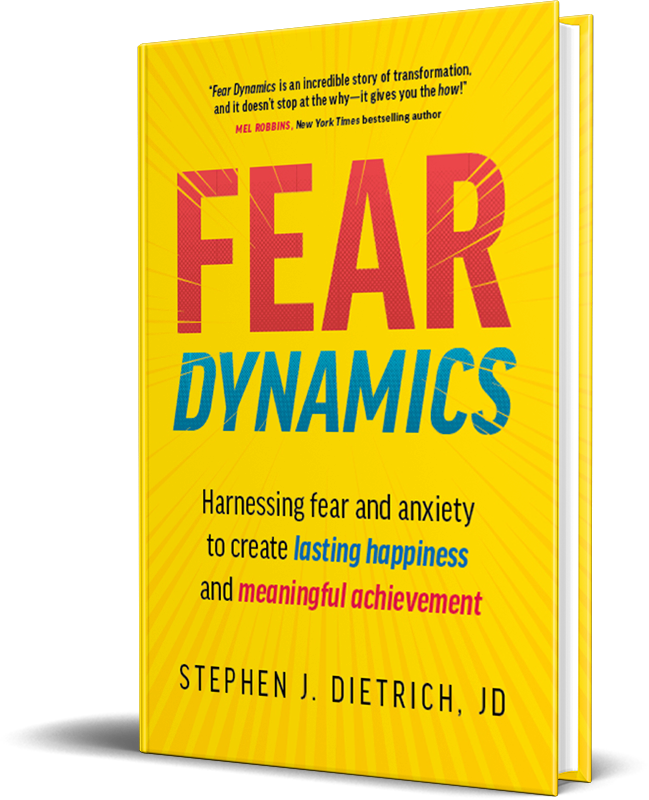
Now is the time to reclaim your life and claim the success and happiness you and your loved ones deserve, and my book — FEAR DYNAMICS: Harnessing Fear and Anxiety to Create Lasting Happiness and Meaningful Achievement — is a great place to start.