A number of years ago, I worked on a transaction that involved two parties that were eager to make a deal happen but became paralyzed at a crucial point by fear — not fear of each other, but fear of losing the deal.
Each side was so afraid of losing the deal that both sides avoided bringing up important issues that needed to be resolved in order for negotiations to move forward. They were afraid that discussing potentially contentious issues would lead to confrontation, thus undermining the negotiations. As a result, they kept kicking the can down the road until a lack of trust in one another resulted in the death of the deal.
Classic example of a self-fulfilling prophecy: a prediction that comes true due to behaviors driven by an underlying belief that the scenario might come true. This deal was doomed from the beginning by fear dynamic — the behavior and communication patterns that occur during interpersonal interactions in which one or more of the people involved are consciously or unconsciously reacting to fears.

Back in 1933, at the peak of the Great Depression, President Franklin D. Roosevelt warned the country during his inaugural address, “The only thing we have to fear is fear itself.” Roosevelt recognized that fear had paralyzed the economy, slowing spending, investing, and hiring. He knew the only solution was to overcome fear and restore confidence.
In my case, as I witnessed this deal unravel, despite my best efforts to hold it together, I observed firsthand the devastating impact that fear can have, not only on the promise of a mutually beneficial business, deal but on the relationship of the two parties negotiating the deal. By the time negotiations collapsed, any trust and respect the two parties had for one another had turned to frustration and bitterness.
Avoiding Avoidance
When I work on transactions, I quickly identify the possible deal breakers — issues that have the potential to undermine negotiations. I make note of them during initial client meetings and subsequent phone calls, and as I review draft documents. I draw attention to them in the draft documents and encourage the two sides to discuss them. I welcome such discourse, because transparency alleviates fear and builds trust. During the deal in question, however, the parties avoided discussing the possible deal breakers, and that avoidance led to the deal’s demise.
Sometimes, deferring discussion of a difficult issue is a useful approach to achieving a specific objective, but when the avoidance of the issue affects the resolution of other issues, or when an issue clearly will be a roadblock, it needs to be discussed. It’s unlikely to simply go away and is very much likely to become a tenacious obstacle as parties become increasingly entrenched in their positions. Avoidance whittles away at goodwill until major issues seem insurmountable.
In this case, I felt powerless, with my client angry and refusing to engage, and the other side complicit in the avoidance.
(more…)Since becoming aware of the devastating effects that fear dynamics were having on my life, I have engaged in multiple forms of therapy and self-help to examine and understand my past and the impact it was having on me and on my thoughts and behaviors.
Through this journey, I developed 11 techniques for managing fear and anxiety and preventing those emotions from disrupting my life. Here, I share a very basic but effective technique — building in a pause.

In part, I discovered a need for this technique when I noticed myself frequently snapping at people when they asked me a very simple and reasonable question. For example, my wife would ask, “What would you like for dinner?” Despite the innocent nature of this question, my palms would sweat, and I would actually get frustrated and angry. Then, I would snap, “I don’t care. Whatever you want.” Who talks like that to someone they love? I did.
Recognizing the Problem and the Root Causes
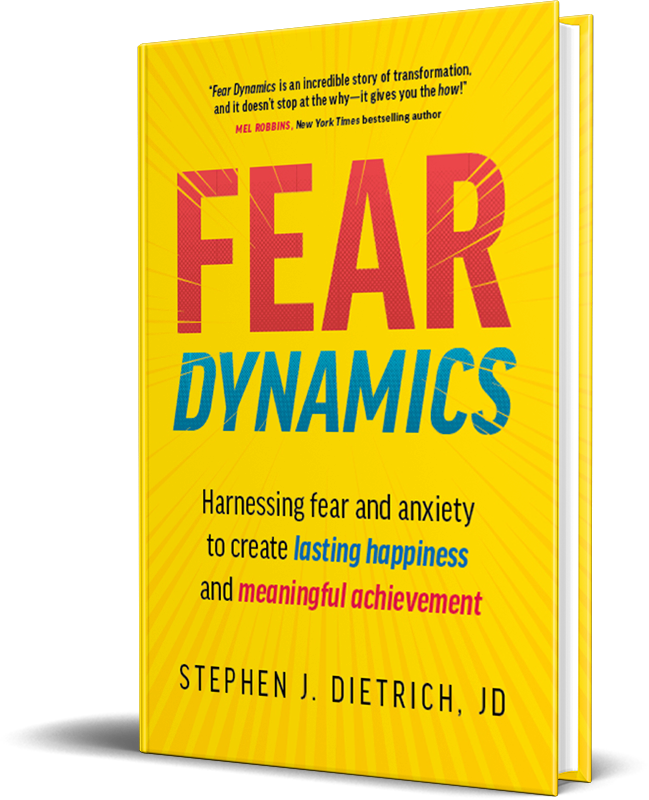
While I’m not proud of acting like that, it stemmed from a traumatic childhood. I won’t go into the details here. I cover all that in my book, FEAR DYNAMICS: Harnessing Fear and Anxiety to Create Lasting Happiness and Meaningful Achievement. To summarize, I attribute my curt, dismissive responses to a combination of the neglect and abuse I suffered in childhood. As a result, I grew up with extremely low self-esteem and an underlying belief that what I thought and what I wanted didn’t matter. And even if those things did matter, I had no control over anything in my life. I was conditioned to act that way.
(more…)We seldom consider the cost of negative emotions like fear, yet it’s important to recognize: The cost can be substantial. Relational dynamics associated with fear can negatively impact success in school or career, personal relationships, business deals, and even local, national, and global issues that affect us all.

Here are just a few expense categories that might be tied to the fear in your life, all of which I encourage you to itemize:
(more…)Fear is like high blood-pressure. It’s a silent killer. However, fear does more than impact your physical health. It also negatively impacts your mental health, your success in school or your career, your relationships, and your ability to fully enjoy life. And it operates far beneath the surface, where most people never realize it is at work.

To determine whether fear is negatively impacting your life, look for the following symptoms:
- Physical symptoms: Rapid heartbeat, sweating, trembling, shortness of breath, gastrointestinal issues, or immune system dysfunction (overactive or under-active immune system).
- Mental health symptoms: Anxiety or depression.
- Poor sleep: If you aren’t sleeping at least six to eight hours a day/night, or wake up not feeling rested, you could be suffering from anxiety or depression without even knowing it.
- Social isolation: You spend little time with friends, family members, or colleagues outside of work. An inability or lack of desire for social contact can reflect an underlying fear of failure, intimacy, or loss.
- A sense of being stuck or trapped: You feel trapped in an unfulfilling relationship, or a job, career or business you no longer enjoy.
- Indecisiveness or procrastination: You know you need to change something in your life, but you are unable or unwilling to act.
- Negative thought patterns: Persistent fear can fuel negative thought patterns. These include catastrophizing (expecting the worst), overgeneralizing (assuming because you failed once any attempt to make a positive change in your life is futile), and black-and-white thinking (seeing only extremes). These thought patterns can contribute to feelings of hopelessness and low self-esteem.
- A pattern of broken or strained relationships: Fear can strain relationships by causing you to withdraw emotionally, become overly dependent on others for reassurance, or exhibit controlling behaviors (from a fear of loss). All parties can end up feeling lonely and resentful as a result.
- Lack of assertiveness: You don’t feel in control of your own life. You have no sense of self-direction and simply go along with what others want. You may over commit, tolerate mistreatment, or have trouble saying “no.” You stuff your emotions and feel a growing sense of bitterness or resentment.
- Dissatisfaction with life in general: Fear can hinder career advancement and personal growth. You see others around you who are no more knowledgeable, skilled, or intelligent than you who are achieving greater success and happiness in their careers and relationships.
- Engagement in self-destructive or avoidance behaviors: Using unhealthy coping mechanisms such as substance use, excessive gaming, or binge-watching to numb feelings of fear or anxiety can provide temporary relief, but ultimately exacerbate the negative impact on your life.
As my book, FEAR DYNAMICS: Harnessing Fear and Anxiety to Create Lasting Happiness and Meaningful Achievement, is about to be released, you might be curious about what the term ‘fear dynamics’ actually means.
Fear dynamics are behavior and communication patterns that occur during interpersonal interactions where the person or people involved are consciously or unconsciously reacting to real or perceived dangers or threats (i.e., fears).
Remember, fear itself isn’t always a negative response. When we sense a threat to our physical safety or well-being, fear can trigger a fight-or-flight response to protect us from the danger. It acts as an early warning sign that initiates physiological changes making us stronger and improving our reaction speed.

However, many of our fears are counterproductive. They can hinder our personal growth and impair our ability to successfully pursue opportunities or form meaningful, lasting relationships.
Recognizing Common Counterproductive Fears
Counterproductive fears are often programmed into us during our childhood. They are instilled in us through social norms, cultural influences, and personal experiences. Often, they are reinforced by parents, teachers, peers, and others in positions of authority. These fears include the following: