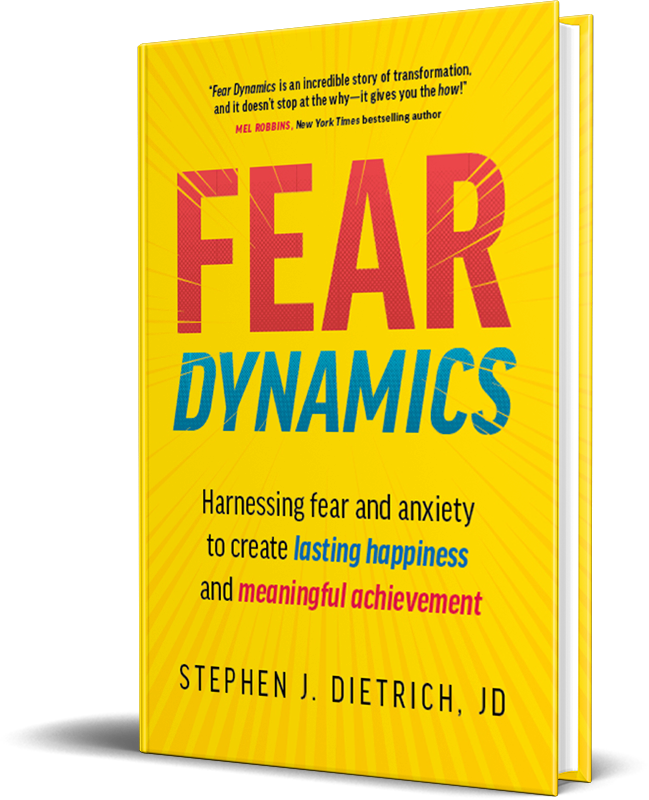

As my book, FEAR DYNAMICS: Harnessing Fear and Anxiety to Create Lasting Happiness and Meaningful Achievement, is about to be released, you might be curious about what the term ‘fear dynamics’ actually means.
Fear dynamics are behavior and communication patterns that occur during interpersonal interactions where the person or people involved are consciously or unconsciously reacting to real or perceived dangers or threats (i.e., fears).
Remember, fear itself isn’t always a negative response. When we sense a threat to our physical safety or well-being, fear can trigger a fight-or-flight response to protect us from the danger. It acts as an early warning sign that initiates physiological changes making us stronger and improving our reaction speed.

However, many of our fears are counterproductive. They can hinder our personal growth and impair our ability to successfully pursue opportunities or form meaningful, lasting relationships.
Recognizing Common Counterproductive Fears
Counterproductive fears are often programmed into us during our childhood. They are instilled in us through social norms, cultural influences, and personal experiences. Often, they are reinforced by parents, teachers, peers, and others in positions of authority. These fears include the following:
- Fear of failure: Pressure to excel academically, athletically, or socially can lead to perfectionism, avoidance of challenges, and low self-esteem.
- Fear of success: Fear of increased expectations, pressure to maintain success, or a fear of outshining others can result in self-sabotage, imposter syndrome (uncertainty about our own intelligence, skills, talents, or accomplishments), and missed opportunities for personal and professional growth.
- Fear of disapproval or rejection: Disapproval from parents, teachers, or peers can shape behaviors and decisions to seek validation and avoid criticism at the expense of self-expression, autonomy, and assertiveness.
- Fear of uncertainty: Fear of uncertainty and the unknown can result in avoidance of new experiences, change, and risk-taking, thereby stifling creativity, innovation, and adaptability.
- Fear of vulnerability: In many cultures that value strength and independence, people are programmed to fear vulnerability and emotional expression. This fear can inhibit emotional intimacy, empathy, and authentic connections with others.
- Fear of change: Disruptions in routines and negative experiences early in life can instill a fear of change, which can hamper personal growth and result in a lack of resilience in dealing with transitions over the course of our life.
- Fear of authority: Frequent or severe disapproval or punishment can lead to compliance, passivity, and a reluctance to challenge authority.
Recognizing the Negative Impacts of Fear Dynamics
Fear dynamics influence behavioral and communication patterns — often to the detriment of everyone involved. Here are a few examples:
- Fear of loss leads to clinginess or possessiveness in relationships, which can drive others away, thus fueling other fears such as fear of rejection or disapproval.
- Fear of criticism inhibits self-expression, authenticity, and risk tolerance. It can make us reluctant to share our ideas or opinions, thereby limiting opportunities for personal growth and career success.
- Fear of uncertainty results in a reluctance to accept or seek change. As a result, if you have a strong fear of uncertainty, you are likely to stay in a dead-end job or an unfulfilling relationship. You may even be reluctant to pursue attractive opportunities that cross your path.
Fear in the workplace . . .
As a corporate attorney with deep expertise in mergers and acquisitions (M&A), I was working with an accounting group on an acquisition for a client. The CPA who was assisting on the deal was constantly offering advice, some of it outside his area of expertise, and putting forth a great effort to drive the transaction. His behavior seemed as peculiar as it was annoying until we discovered he was up for a promotion to partner. His fear of not making partner was making him overreach.
Once I learned of the impending promotion, I stressed to him that my client valued consensus among professionals and a sense that all of us were working together to achieve the client’s goals. After addressing the issue, the CPA and I were able to coordinate efforts. I was able to allay his fear that he needed to impress everyone on the deal with his knowledge and consequently he relaxed a bit and offered valid advice. As a result, the CPA was elevated to partner later that year, and the client complimented both of our firms on how well we worked together.
Overall, fear can negatively impact the quality of your life and the lives of everyone around you, including friends, family members, colleagues, and business associates.
Recognizing and addressing fear dynamics is essential to living a richer, happier, and more fulfilling life.
Curious to know more? Want to learn practical techniques for managing relational fear in your personal or professional life? Read my book, FEAR DYNAMICS: Harnessing Fear and Anxiety to Create Lasting Happiness and Meaningful Achievement.