

Since becoming aware of the devastating effects that fear dynamics were having on my life, I have engaged in multiple forms of therapy and self-help to examine and understand my past and the impact it was having on me and on my thoughts and behaviors.
Through this journey, I developed 11 techniques for managing fear and anxiety and preventing those emotions from disrupting my life. Here, I share a very basic but effective technique — building in a pause.
In part, I discovered a need for this technique when I noticed myself frequently snapping at people when they asked me a very simple and reasonable question. For example, my wife would ask, “What would you like for dinner?” Despite the innocent nature of this question, my palms would sweat, and I would actually get frustrated and angry. Then, I would snap, “I don’t care. Whatever you want.” Who talks like that to someone they love? I did.
Recognizing the Problem and the Root Causes
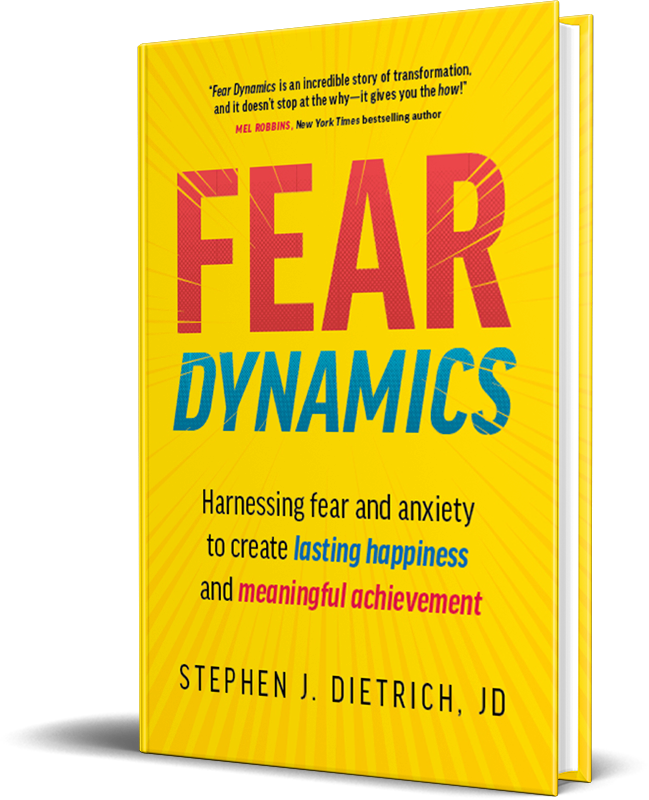
While I’m not proud of acting like that, it stemmed from a traumatic childhood. I won’t go into the details here. I cover all that in my book, FEAR DYNAMICS: Harnessing Fear and Anxiety to Create Lasting Happiness and Meaningful Achievement. To summarize, I attribute my curt, dismissive responses to a combination of the neglect and abuse I suffered in childhood. As a result, I grew up with extremely low self-esteem and an underlying belief that what I thought and what I wanted didn’t matter. And even if those things did matter, I had no control over anything in my life. I was conditioned to act that way.
I also was guilty of the same kind of behavior at work. Simple questions triggered anxiety attacks accompanied by racing heartbeat, flushed face, sweaty palms, and a nearly overwhelming desire to escape. To cope, I perfected the perfunctory response — be wishy-washy, safe, and half-hearted. The internal pressure on my brain drove me to be reactive in conversations, hurrying my responses to speed the discussion to an end. If I could only exit the conversation without saying something the other person may not like, or revealed me to be a fraud, that was success. I felt safe.
After I was able to recognize my struggles with anxiety and fear, I realized I didn’t know how to respond to simple questions or situations without feeling like I was being attacked or ignored. I needed to create a method to respond to questions in a healthy and productive way. The first hurdle I worked to clear was slowing down my mind and getting a handle on my physical responses to the emotionally-driven anxiety. I realized if I could just slow down the situation, I could assess my feelings and the other person’s intent, and by doing this, I could produce a thoughtful and meaningful response. I worked hard to eliminate my customary canned response, and the way I succeeded was by building in a pause.
Training Yourself to Build in a Pause
The first step of this technique of building in a pause is to slow down, thereby slowing the pace of everything around you. Give yourself time to think and act without feeling rushed or pressured.
Taking time to pause — and not be disruptive to the natural flow of life — is easier said than done. Here is the method I use:
- Think about that old Simon and Garfunkel tune, the “59th Street Bridge Song (Feeling Groovy.)”
- Then consciously hum, sing, or think to yourself, “Slow down, you move too fast.”
- Put that into action by reciting these four simple words: Build in a pause.
Pro Tip
Remember to slow down and take a breath, a pause, a moment. It’s okay. You don’t need permission. And nobody’s going to force an immediate response from you.
I know it sounds too simple — and trust me when I tell you it does takes focus and effort. If you can master building in a pause before you respond in nearly every situation, you are likely to see massive positive changes in all your relationships and in your daily interactions with everyone. Whenever someone asks a question or you feel compelled to express yourself, slow down, take a breath, a pause, a moment. It’s the perfect response in any situation. In fact, it will likely improve your reaction to every stimulus or provocation the universe provides.
Practice
I had to practice a great deal before I was comfortable enough to routinely request a moment to think and to use that moment productively.
- Practice at home or with friends in low-pressure situations.
- Let people know that you are going to be practicing this technique. Sometimes, practice is easier when others are aware of the change you are trying to make. It’s like letting people know you’re trying to be healthier, so they understand why you’re having fruit for dessert instead of that fudge brownie.
- Practice asking for a moment to think even if you really don’t need it. It will become part of what people expect from you, so when you need it, it is available.
Most important: Keep practicing. It’s like creating muscle memory so that your mind subconsciously requests a moment whenever you need more time to think or feel. Building in a pause—no matter how long — will help you make better, more thoughtful choices. This tiny habit has significantly improved my relationships and interactions with others in both casual and high-pressure settings. It helps me almost every day to avoid getting entrenched in fear dynamics. I strongly urge you to adopt it.
My book, FEAR DYNAMICS: Harnessing Fear and Anxiety to Create Lasting Happiness and Meaningful Achievement includes 10 additional Fear Dynamics Techniques.

One Response
A simple, but not easy technique for sure. But the potential profound positive impact is astounding to think about! And I am certain one who needs to build in a pause!!! Thank you for sharing. I will definitely be practicing this as I wait on the release of your book to read and learn more about your 11 for managing fear and anxiety.