
Fear is like high blood-pressure. It’s a silent killer. However, fear does more than impact your physical health. It also negatively impacts your mental health, your success in school or your career, your relationships, and your ability to fully enjoy life. And it operates far beneath the surface, where most people never realize it is at work.

To determine whether fear is negatively impacting your life, look for the following symptoms:
- Physical symptoms: Rapid heartbeat, sweating, trembling, shortness of breath, gastrointestinal issues, or immune system dysfunction (overactive or under-active immune system).
- Mental health symptoms: Anxiety or depression.
- Poor sleep: If you aren’t sleeping at least six to eight hours a day/night, or wake up not feeling rested, you could be suffering from anxiety or depression without even knowing it.
- Social isolation: You spend little time with friends, family members, or colleagues outside of work. An inability or lack of desire for social contact can reflect an underlying fear of failure, intimacy, or loss.
- A sense of being stuck or trapped: You feel trapped in an unfulfilling relationship, or a job, career or business you no longer enjoy.
- Indecisiveness or procrastination: You know you need to change something in your life, but you are unable or unwilling to act.
- Negative thought patterns: Persistent fear can fuel negative thought patterns. These include catastrophizing (expecting the worst), overgeneralizing (assuming because you failed once any attempt to make a positive change in your life is futile), and black-and-white thinking (seeing only extremes). These thought patterns can contribute to feelings of hopelessness and low self-esteem.
- A pattern of broken or strained relationships: Fear can strain relationships by causing you to withdraw emotionally, become overly dependent on others for reassurance, or exhibit controlling behaviors (from a fear of loss). All parties can end up feeling lonely and resentful as a result.
- Lack of assertiveness: You don’t feel in control of your own life. You have no sense of self-direction and simply go along with what others want. You may over commit, tolerate mistreatment, or have trouble saying “no.” You stuff your emotions and feel a growing sense of bitterness or resentment.
- Dissatisfaction with life in general: Fear can hinder career advancement and personal growth. You see others around you who are no more knowledgeable, skilled, or intelligent than you who are achieving greater success and happiness in their careers and relationships.
- Engagement in self-destructive or avoidance behaviors: Using unhealthy coping mechanisms such as substance use, excessive gaming, or binge-watching to numb feelings of fear or anxiety can provide temporary relief, but ultimately exacerbate the negative impact on your life.
Perhaps, after reading these symptoms you realize that you are being impacted by fear.
Fear in The Workplace
Here are a few of the most common warning signs that fear is at the root of counterproductive behavior or communication in the workplace:
- Peculiar behavior or communication: When a person is acting out of character, something is going on beneath the surface to cause it, and that something is often fear.
- Self-deprecation: Self-deprecation is a classic symptom of insecurity, typically resulting from fear.
- Lack of eye contact: This is another classic sign of insecurity, again often inspired by fear.
- Lack of initiative and innovation: People are naturally creative and generous unless they are afraid. Having had an idea shot down in the past may stifle you to think creatively in the here and now.
- Excessive carbon copying of email messages: When personnel carbon copy superiors excessively, they are usually insecure, which is often a symptom of fear.
- Explosive outbursts, especially from leadership: Fear is often expressed as anger, which evokes fear. When leadership is the source of the outbursts, you can be certain that the organization is operating in a culture of fear.
- Inability to admit mistakes or limitations: Fear often places people on the defensive, making them unable to recognize or take responsibility for mistakes.
Realize that you can become a victim of fear dynamics when others are experiencing a fear they have not recognized or addressed. In other words, other people’s fears can negatively impact your life.
Before I fully understood and addressed my own fears, I witnessed the harmful effects they had on my loved ones, and I am reminded daily through my work as an attorney, the negative impact that fear can have on potential business deals. I have seen great business deals fall apart because one or both parties were driven more by their fears than their self-interests. In many cases, I have been able to save a business deal by pointing out and addressing the role that fear was playing.
I strongly encourage you to perform a self-inventory to identify areas in your life where fear may be at work. Start with yourself and then look at your personal relationships and those in your workplace. Look at both behaviors and your communications with others.
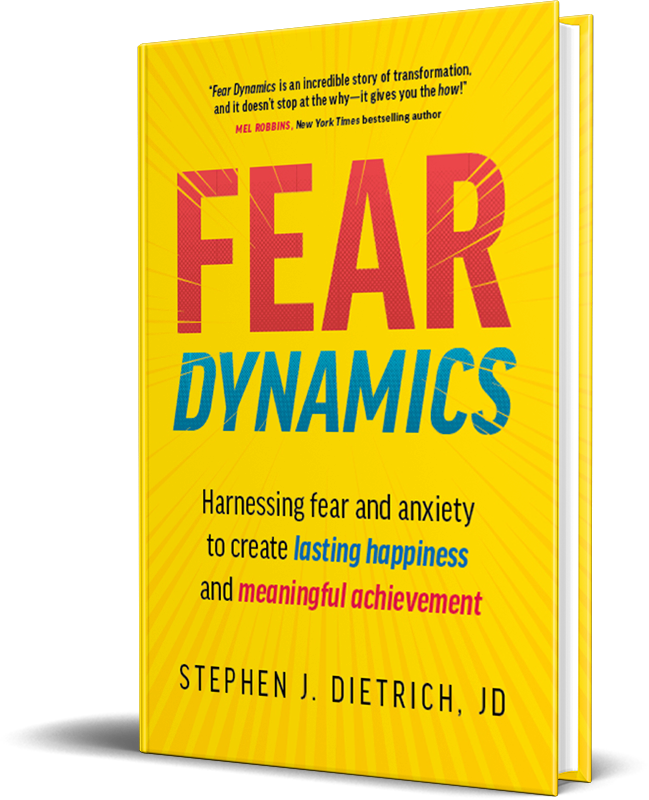
Identifying fear dynamics in your personal or professional life is only the first step, but it is a key stage in managing fear. Sometimes, simply recognizing when fear is at work and refusing to give it power is enough. However, for long-term recovery, you need to identify and address the root causes of your fears, which is something I discuss in my book, FEAR DYNAMICS: Harnessing Fear and Anxiety to Create Lasting Happiness and Meaningful Achievement.